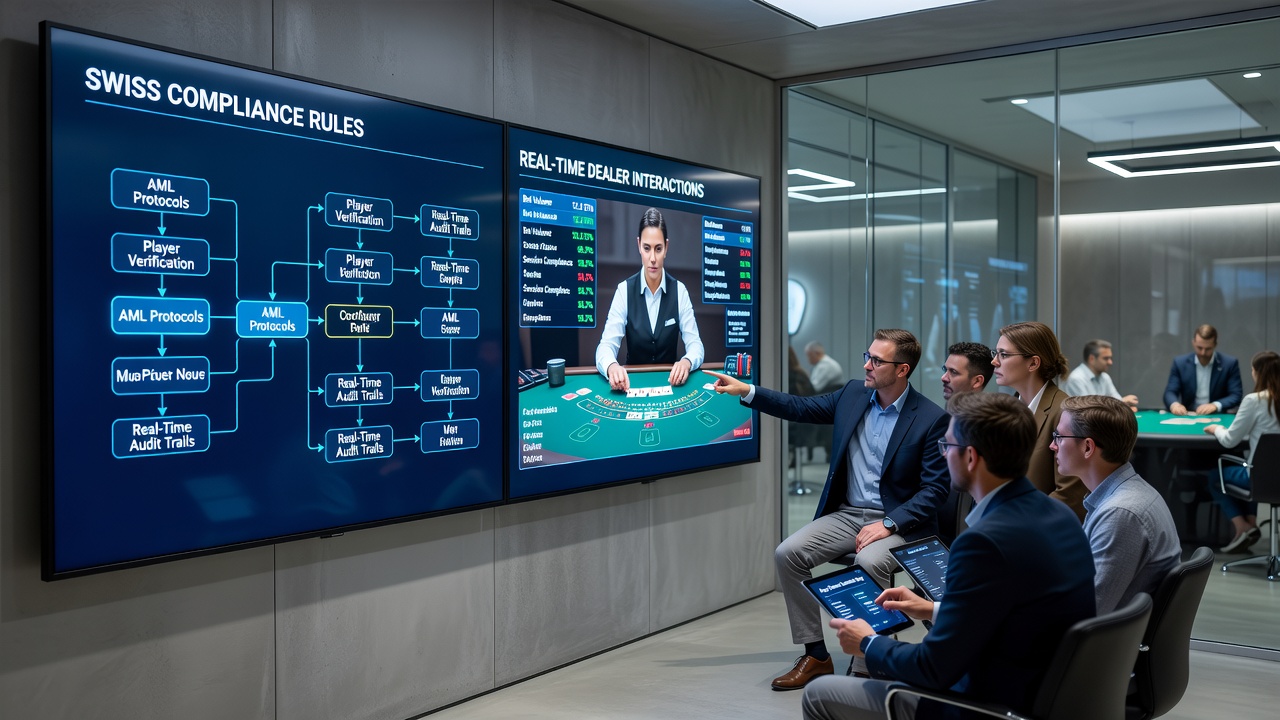
Unpacking Intersections Between Swiss Compliance Rules and Real-Time Dealer Interactions in App-Driven Table Game Sessions
Swiss federal rules on online gambling shape how dealers handle live sessions in app-based table games, and those requirements extend directly into every real-time exchange between players and staff. Data from regulatory filings show that operators must embed verification steps, session logging, and responsible gaming prompts into the flow of play without disrupting the pace of blackjack or roulette rounds. Observers note that this creates specific protocols for dealers who appear on video feeds while players tap decisions on phones or tablets across the country.
Swiss Federal Framework for Digital Table Games
The Swiss Federal Gaming Board oversees licensing and ongoing audits for platforms that stream live dealers into mobile applications, and operators receive approval only after demonstrating that every interaction meets standards for fairness, player protection, and transaction security. Figures released in late 2025 indicated steady growth in licensed app sessions, with further updates expected by November 2026 that may refine reporting intervals for real-time dealer logs. Those who manage dealer teams must train staff on timing rules that prevent delays in card reveals or bet resolutions while still allowing mandatory identity checks to occur mid-session when flagged by the system.
Rules require dealers to maintain neutral language and avoid any statements that could influence player choices, yet the same guidelines permit scripted responsible gaming messages to appear on screen without dealer involvement. This separation keeps the human element focused on game flow while automated layers handle compliance alerts. Research from industry monitoring groups shows that dealers complete an average of three compliance-related pauses per hour in high-volume sessions, and these pauses integrate into the app without freezing the video stream.
Real-Time Interactions Under Compliance Constraints
Dealers working in app-driven environments follow scripted sequences that align with Swiss legislation on game integrity, and each verbal cue or gesture gets recorded for later review. When a player requests a card or places a side bet, the dealer processes the action while the app simultaneously logs timestamps and player account status. Experts have observed that this dual tracking prevents disputes because every decision carries both a visual record and a data entry that regulators can audit within hours.
App interfaces often display dealer identification numbers alongside the live feed, allowing players to reference specific staff members if questions arise after a session ends. Training programs emphasize clear enunciation and consistent hand movements so that camera angles capture every step without ambiguity. Data indicates that platforms using these standardized dealer behaviors report fewer regulatory queries compared with earlier implementations that lacked uniform protocols.
App Architecture and Dealer Synchronization
Mobile applications connect to studio feeds through low-latency protocols that keep dealer actions synchronized with player inputs, and Swiss rules mandate that any lag exceeding defined thresholds triggers automatic session reviews. Operators deploy monitoring tools that flag when dealers repeat phrases or gestures outside approved patterns, which helps maintain consistency across thousands of daily sessions. One study revealed that synchronization errors dropped by measurable margins after platforms introduced real-time compliance dashboards visible to both dealers and supervisors.

Payment verification layers operate in the background during table game rounds, pulling from the same player profile that dealers reference for age and location checks. This integration means a dealer may pause briefly while the system confirms details, yet the overall session continues without players noticing extended interruptions. Reports compiled by regulatory bodies show that such layered checks occur most frequently during peak evening hours when session volumes rise.
Training Protocols and Oversight Mechanisms
Dealers undergo certification that covers both game mechanics and Swiss-specific compliance language, and ongoing evaluations test their ability to handle real-time queries while staying within regulatory boundaries. Supervisors review recorded sessions weekly, focusing on instances where dealers navigated player requests that touched on deposit limits or self-exclusion flags. According to records from the Swiss Federal Gaming Board, these reviews have contributed to consistent application of rules across different app providers.
Platforms also incorporate feedback loops that let dealers report technical issues with the app interface during live play, which feeds into updates that keep compliance tools aligned with game speed. Observers note that this collaboration between studio staff and technical teams reduces friction points that could otherwise affect session quality or trigger additional audits.
Cross-Border Comparisons and Swiss Specifics
While Swiss frameworks emphasize integration of compliance into every dealer exchange, other jurisdictions apply different timing requirements, and data from the Alcohol and Gaming Commission of Ontario illustrates how varied regional rules influence dealer scripting in similar app environments. Swiss operators adapt by embedding location-based restrictions that activate automatically when players cross borders, ensuring dealers never engage with unauthorized accounts in real time. This geographic filtering operates alongside the live video feed without requiring dealer intervention.
Conclusion
Swiss compliance rules intersect with real-time dealer work in app-driven table games through layered protocols that cover verification, logging, and responsible gaming prompts while preserving game flow. Data collected through 2026 continues to track how these systems perform as session volumes grow, and operators adjust training and technology to meet evolving standards. The result is a structured environment where dealers operate within clear boundaries that support both regulatory oversight and uninterrupted player experiences.